
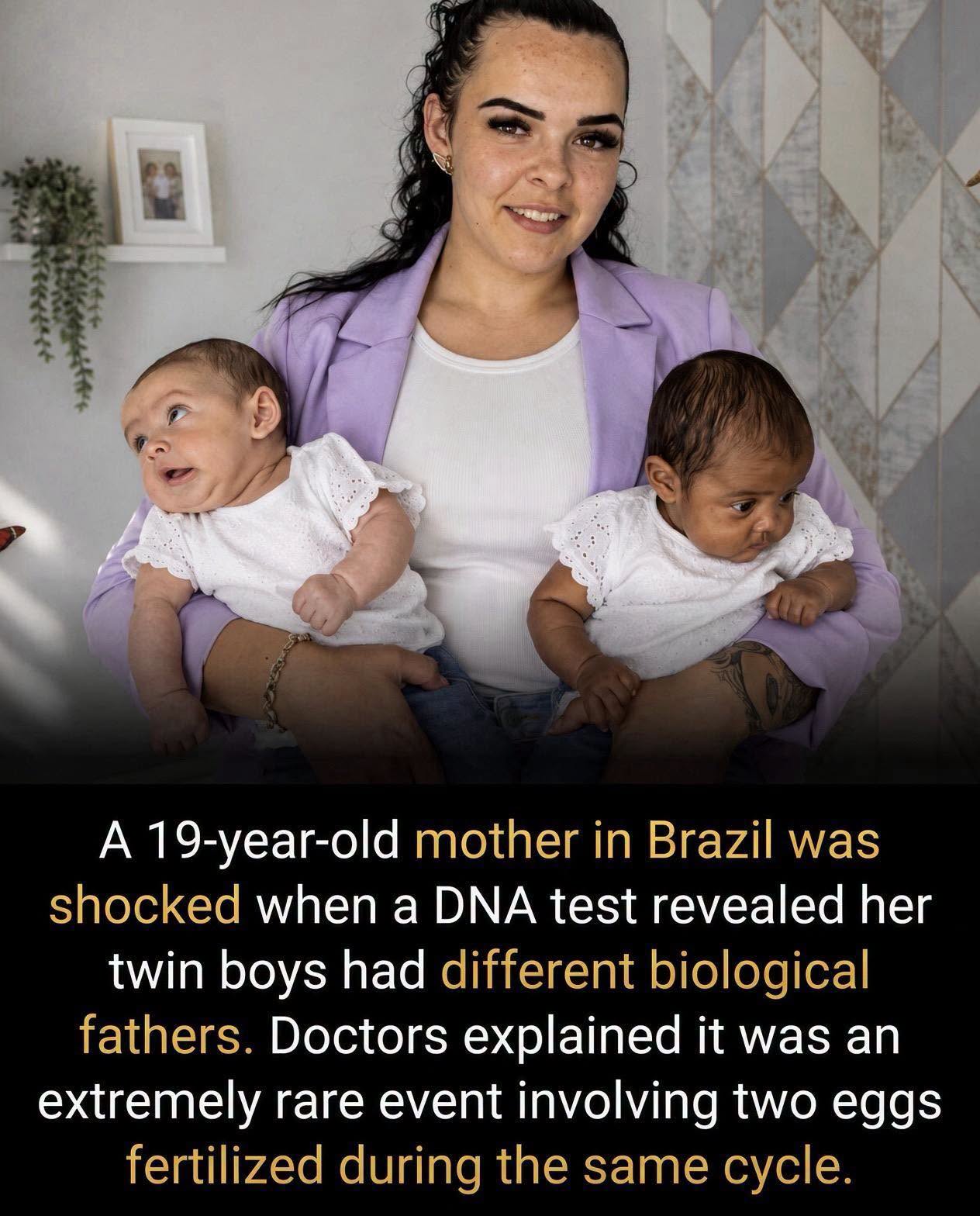
Twins With Two Biological Fathers: The Rare Biology Behind a Remarkable Birth
At first, there was nothing unusual about the birth of the twins. They were born to the same mother, at the same time, and appeared to be ordinary fraternal twins.
But a DNA test later revealed something almost unbelievable: the twins had different biological fathers.
The unusual case involved a 19-year-old woman in Goiás, Brazil. When she became concerned about the children’s paternity, a test was performed on the man she believed was their father.
The results produced an unexpected discovery.
He was the biological father of only one of the twins.
A Second DNA Test Changed Everything
The mother then contacted another man she had been with around the same period of conception. A second paternity test was performed.
The result confirmed the extraordinary possibility: the second man was the biological father of the other twin.
Although the boys were born as twins from the same pregnancy, they had inherited their paternal DNA from two different men.
How Can This Happen?
Doctors refer to this phenomenon as heteropaternal superfecundation.
It can occur when a woman releases two eggs during the same menstrual cycle. If she has sexual intercourse with two different men within the fertile window, sperm from each man can potentially fertilize a different egg.
The result is a pair of fraternal twins who share the same mother—but have different biological fathers.
Rare, But Biologically Possible
The phenomenon is extremely uncommon and can easily go unnoticed, particularly when the children resemble one another or when paternity is never questioned.
The twins are still genetically related as siblings through their mother, but their paternal genetic contributions come from different men.
It is a striking example of how unusual combinations of timing, ovulation and fertilization can occur during human reproduction.
One pregnancy. Two eggs. Two fathers. Two twins.
What initially appeared to be an ordinary twin birth turned out to reveal a remarkably rare biological event