
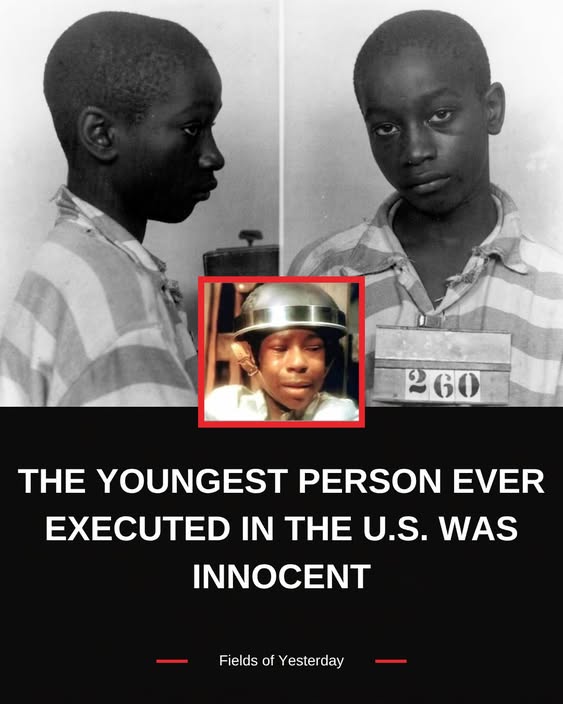
A South Carolina courtroom took less than three hours in 1944 to decide a 14-year-old boy should die
George Stinney Jr. He was Black. The victims were two young white girls. And within weeks, he was arrested, tried, convicted, and executed — all without a single piece of physical evidence ever being presented against him.
The facts behind it are hard to look away from.
Stinney was arrested and interrogated alone, with no parent, no lawyer, and reportedly signed a confession under pressure. His trial lasted a single day. The all-white jury took just 10 minutes to find him guilty. No appeal was ever filed. Three months after his arrest, he was executed in the electric chair — so small for the chair that guards had to use a Bible as a booster seat.
This isn’t speculation either. Decades later, when the case was finally reopened, the presiding judge found the original trial violated basic constitutional protections — no real defense, no witnesses called on his behalf, and virtually no surviving evidence to support the conviction in the first place.
Here’s what this means for how the case finally ended.
In 2014 — seventy years after his execution — a South Carolina judge formally vacated George Stinney Jr.’s conviction, ruling that his trial had denied him due process from the start.
He never lived to hear it. His family did.
The youngest person ever executed in the United States didn’t get a real trial. He got a formality — and it took seven decades for the state to admit it