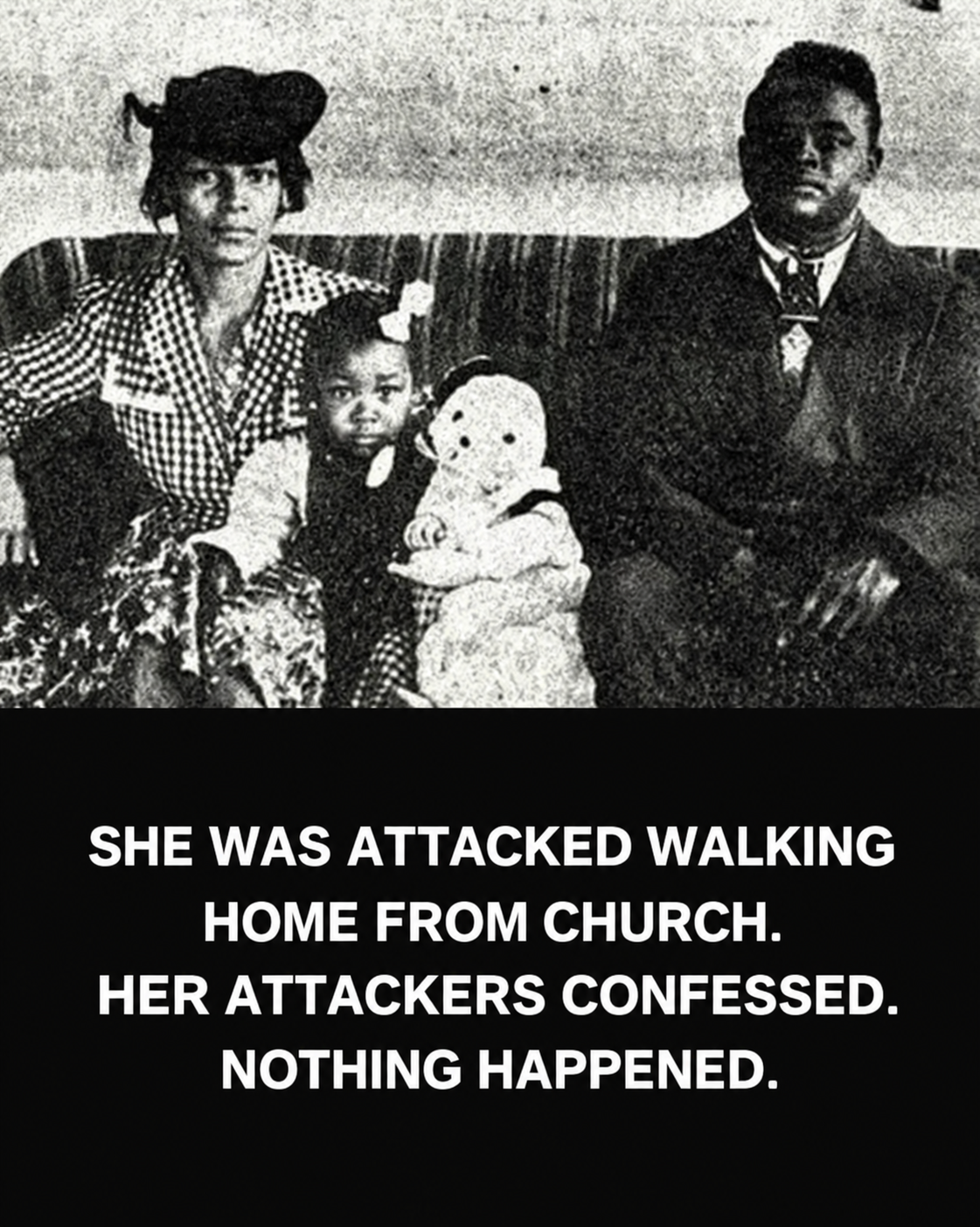
She was walking home from a church service in 1944
when six armed men in a green Chevrolet forced her off the road.
Recy Taylor was 24. A wife, a mother, a sharecropper in Abbeville, Alabama. The men pulled guns on her, forced her into the car, and drove her to an isolated pecan grove. There, one after another, all six of them raped her. When they were finished, they blindfolded her and left her on the side of a dirt road, threatening to kill her if she ever told anyone.
The facts behind what happened next are hard to look away from.
Taylor told anyway. She reported it immediately and identified her attackers by name. The men were brought in for questioning, and several of them confessed to what they’d done.
It gets worse. Twice, the case went before a grand jury. Twice, an all-white, all-male jury heard the confessions and declined to indict a single one of them. No trial. No charges. No consequences at all.
This isn’t just a story passed down either. The NAACP sent an investigator to Abbeville to look into the case — Rosa Parks, more than a decade before she became known for anything else. Parks helped organize what became one of the first major civil rights campaigns in the country, built entirely around demanding justice for Taylor.
Here’s what this means for how the case finally ended.
It didn’t, not really. In 2011 — sixty-seven years after the attack — the Alabama Legislature passed a resolution formally apologizing to Taylor for the state’s failure to prosecute her attackers. By then, most of the men who did this to her were already dead.
Taylor lived to hear the apology. She died in 2017, at 97 years old, having never seen a single one of them face a courtroom.
The most damning part of Recy Taylor’s case isn’t only what was done to her. It’s that men confessed to it, on the record, and the system still chose to protect them instead of her.
An apology 67 years later isn’t justice. It’s the state finally saying out loud what everyone already knew.